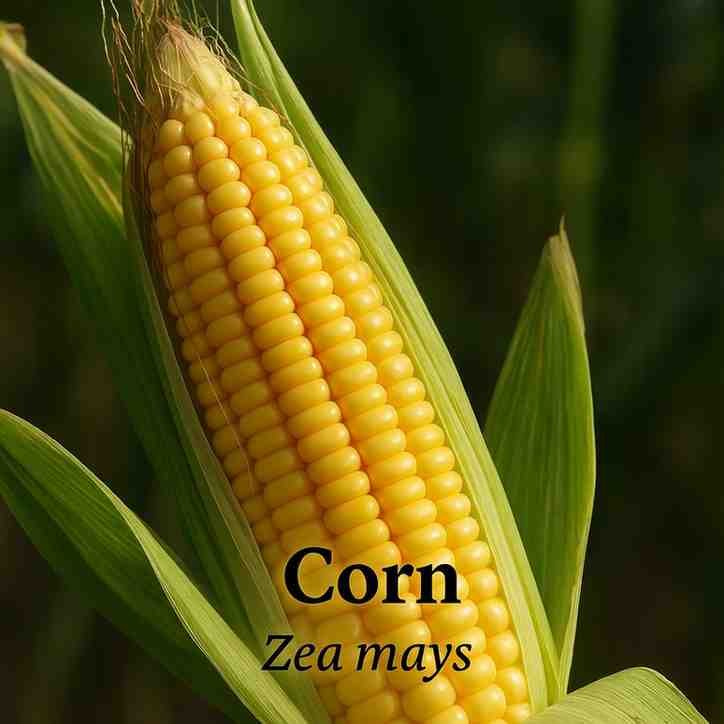
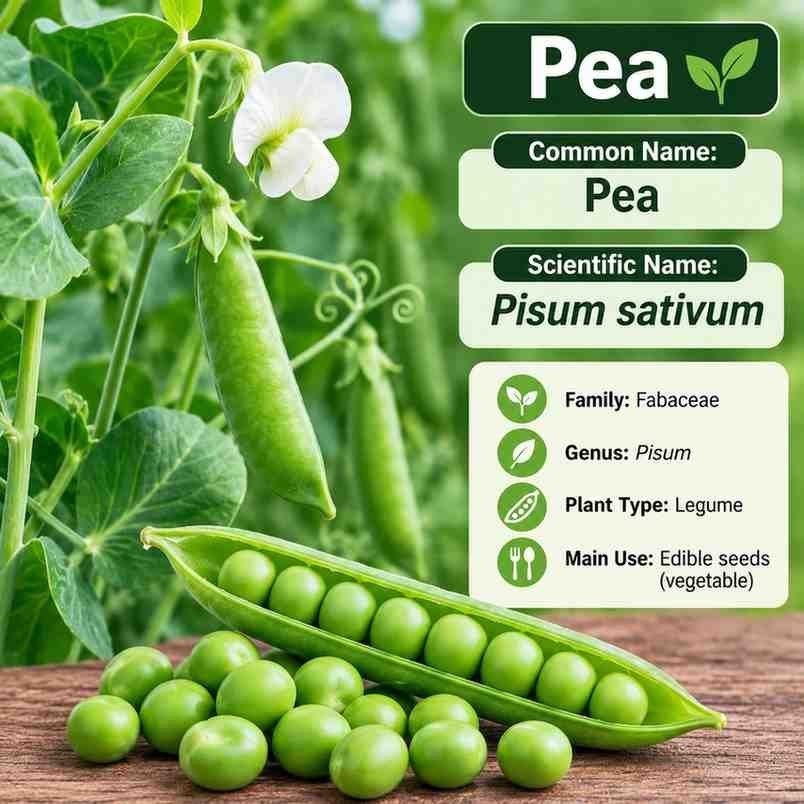
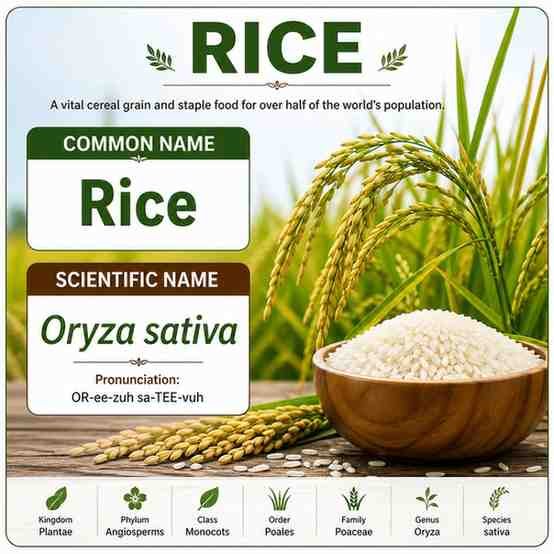
What is the scientific name for rice? The common rice scientific name is Oryza sativa.
Oryza sativa is the most cultivated rice plant species. Rice, a cereal grain, is the main food for more than 50% of the world’s population. It is a member of the Poaceae family, which is commonly referred to as the grass family. The scientific name for rice allows researchers to identify, study, and classify this essential food crop in the plant kingdom.
Table of Contents
Rice is primarily grown in Asia, Africa, and small areas of South America. It is the main source of food that contains energy, carbohydrates, and vitamins. Moreover, knowing the scientific name of rice is also beneficial for agricultural research and crop improvement.
What is the Scientific Name for Rice?
Oryza sativa and Oryza glaberrima are the two main cultivated types of rice. Oryza sativa is a widely grown Asian rice, known for its high yields and global distribution, while Oryza glaberrima is an African rice, traditionally cultivated in West Africa and valued for its resilience to local pests and harsh conditions.
Meaning and pronunciation
The biological name of rice is Oryza sativa, which translates as “rice” from both Greek and Persian sources and as “cultivation” from Latin. The correct way to say it is OR-ee-zuh sa-TEE-vuh, with “Oryza” being almost like “oratory” and “sativa” being a counterpart of “native” in rhythm.
Rice scientific name meaning:
- Oryza: It is the name of the genus that includes rice. Its origin can be traced back to the Greek “oryza,” which probably stems from a Persian term and is also connected to the Sanskrit word for rice, “vrihi.”
- sativa: This name denotes the species. It is derived from the Latin term “sativus,” which means “cultivated” or “sown.”
Pronunciation of rice scientific name:
- Oryza: OR-ee-zuh
- sativa: sa-TEE-vuh
Biological Classification of Rice
| Classification Level | Scientific Term | Meaning |
|---|---|---|
| Kingdom | Plantae | Plant kingdom |
| Phylum | Angiosperms | Flowering plants |
| Class | Monocots | One seed leaf |
| Order | Poales | Grass order |
| Family | Poaceae | Grass family |
| Genus | Oryza | True rice group |
| Species | sativa | Cultivated species |
The scientific name rice classification shows that rice is a grass-like plant that is closely related to wheat, corn, and barley.
Habitat of Rice (Oryza sativa)
Rice grows in warm and humid regions where water is available for most of the growing season. Rice, whose scientific name is Oryza sativa, belongs to a crop that adapts well to flooded conditions. This adaptability makes rice different from many other cereal crops, especially regarding environmental preferences.
Main Habitat Conditions:
Following the general habitat description, it is important to consider the specific environmental conditions that support rice plant growth.
- Temperature: 20°C to 35°C Rainfall: 1000 mm to 2000 mm annually
- Soil Type: Clay or loamy soil with good water retention
- Water: Standing water during early growth stages
Rice is predominantly grown in tropical and subtropical regions. The largest rice-producing areas include:
South Asia (India, Pakistan, Bangladesh), Southeast Asia (Thailand, Vietnam, Indonesia), East Asia (China, Japan), parts of Africa, and South America
The common name for rice fields is paddy fields. The fields receive flooding, which helps control weeds while promoting plant growth. Oryza sativa stands out among all crops because it can thrive in waterlogged soil conditions.
Uses of Rice
The rice represents a crop that has many uses beyond food. Rice is used in daily life, industry, and agriculture.
Food Uses
Rice is a staple food in many countries. It is used in different forms:
- Boiled rice
- Fried rice
- Rice flour
- Rice noodles
- Rice porridge
Rice provides energy and is easy to digest. It is often eaten with vegetables, meat, or lentils.
Industrial Uses
Rice is also used in several industries:
- Rice bran oil: Extracted from rice husk
- Cosmetics: Used in skincare products
- Paper production: Rice straw is used to make paper
- Animal feed: Broken rice and husk are used for livestock
Agricultural Uses
- Rice straw is used as fodder for animals
- It is also used as organic fertilizer
- Helps improve soil structure
Types of Rice
There are many types of rice based on grain size, color, and cultivation method. Thousands of varieties of rice.
Types Based on Grain Size:
| Type | Description |
|---|---|
| Long Grain Rice | Long and thin grains, stays separate after cooking |
| Medium Grain Rice | Slightly sticky when cooked |
| Short Grain Rice | Soft and sticky texture |
Types based on colors:
| Type | Description |
|---|---|
| White Rice | Most commonly consumed |
| Brown Rice | Whole grain with bran layer |
| Black Rice | Rich in antioxidants |
| Red Rice | Contains nutrients and fiber |
Types Based on Cultivation:
| Type | Description |
|---|---|
| Upland Rice | Grown in dry soil |
| Lowland Rice | Grown in flooded fields |
| Deep Water Rice | Grows in deep water areas |
Nutritional Value of Rice
Rice is an important source of nutrients. The rice represents a crop rich in energy.
Nutritional Components (Per 100g cooked rice)
| Nutrient | Amount |
|---|---|
| Carbohydrates | 28g |
| Protein | 2.7g |
| Fat | 0.3g |
| Fiber | 0.4g |
| Calories | 130 kcal |
Rice primarily provides carbohydrates, which provide energy for daily activities.
Facts About Rice
Rice is one of the most vital agricultural products worldwide. Rice’s Latin name, Oryza sativa, is associated with many interesting facts that highlight its global importance.
Key Facts About Rice:
- Rice sustains more than half of the global population.
- It is the second most produced cereal crop after maize.
- Asia produces about 90% of the world’s rice.
- Rice grains have a high carbohydrate content, which provides energy.
- There are more than 40,000 rice varieties that exist throughout the world.
- Rice cultivation dates back over 10,000 years.
Rice serves as more than just a food crop, as it serves as a cultural element, a traditional practice, and an economic resource in numerous countries.
Conclusion
The scientific name for rice, Oryza sativa, identifies it as one of the world’s most important food crops. The plant belongs to the genus Oryza and the family Poaceae. Rice grows in warm, humid environments and supports billions of people with its nutritional value.
Also Read:
- Scientific and Botanical Name of Wheat, Types, Uses, and Nutrition
- Mustard Scientific Name, Genus, Uses, Benefits, and Types
- Pea Scientific Name, Genus, Uses, Benefits, and Types
- Corn Scientific Name, Genus, Types, Parts, Uses, and Benefits
FAQs
What is the scientific name for rice?
The scientific name for rice is Oryza sativa.
What is the genus of rice?
The genus of rice is Oryza.
What family does rice belong to?
Rice belongs to the Poaceae family, also known as the grass family.
What are the two main types of cultivated rice?
The two main types are Oryza sativa (Asian rice) and Oryza glaberrima (African rice).
Where is rice mainly grown?
Rice is mainly grown in Asia, Africa, and parts of South America.
Why is rice important?
Rice is important because it is a staple food for more than half of the world’s population.