What is the scientific name for a cucumber? The common cucumber scientific name is Cucumis sativus.
Cucumber is a cultivated plant used as a vegetable in daily food across many countries. People search for the cucumber’s scientific name along with genus, nutrition, uses, benefits, types, and classification details.
Cucumber grows as a vine crop that farmers cultivate during warm weather periods. The plant has a recognized family classification together with its scientific Latin name, which scientists use to document it in all botanical records.
Table of Contents
Scientific Name of Cucumber and Latin Name
Cucumis sativus is the Latin name for the cucumber.
The scientific name follows binomial nomenclature rules used in botanical classification. Scientists use two-part Latin names to identify each plant species for scientific purposes.
Cucumber Scientific Name Breakdown:
Latin meaning:
- Cucumis: cucumber or gourd type plant
- Sativus: cultivated or farm-grown
The scientific name Cucumis sativus identifies the cucumber plant as a cultivated variety.
Cucumber Scientific Name Pronunciation
Pronunciation: KOO-koo-mis suh-TY-vus
The scientific name serves as the official term that botany books, seed catalogs, and agricultural databases use to identify the plant because common names lead to regional term confusion.
Cucumber Genus and Botanical Classification
The scientific name places the plant in a defined taxonomy structure used in botany and plant science.
| Taxonomic Rank | Classification |
|---|---|
| Kingdom | Plantae |
| Division | Angiosperms |
| Class | Eudicots |
| Order | Cucurbitales |
| Family | Cucurbitaceae |
| Genus | Cucumis |
| Species | sativus |
The cucumber shares the Cucurbitaceae family with melon, squash, and pumpkin crops. Plants in this family show vine growth, tendrils, and fleshy fruits.
Genus Cucumis Plant Group
The genus Cucumis includes:
- Cucumber: Cucumis sativus
- Muskmelon: Cucumis melo
Plants in this genus show similar flower structure and seed pattern. The scientific name confirms its position in this plant group.
Cucumber Family
The cucumber belongs to the Cucurbitaceae family, commonly known as the gourd family.
Other well-known crops in this family include:
- Pumpkin
- Squash
- Melon
- Watermelon
- Bottle gourd
- Bitter melon
Many members of the Cucurbitaceae family produce vines and fruits. Their flowers and growth patterns also share several botanical features.
Cucumber Plant Characteristics
The cucumber plant is an annual herbaceous vine. It produces stems that can spread across the ground or climb when a support system is available.
Common cucumber plant characteristics include:
- Green vine-like stems
- Broad leaves
- Tendrils that help the plant climb
- Yellow flowers
- Elongated or round fruits depending on variety
- Seeds inside the mature fruit
- Shallow to moderately spreading roots
Cucumber plants can grow along the soil surface, but gardeners often use trellises to support the vines. Vertical growth can make harvesting easier and can improve air movement around the foliage.
Cucumber Fruit Characteristics
Cucumber fruits vary significantly among varieties. Most common garden cucumbers have green skin and firm, crisp flesh.
Depending on the variety, cucumber fruits can have:
- Smooth or rough skin
- Dark green or light green color
- Short or long fruit length
- Small or large seeds
- Thin or thick skin
- Round, cylindrical, or elongated shapes
Young cucumber fruits are normally harvested before the seeds become large and hard. Some varieties are specifically bred for fresh eating, while others are grown mainly for pickling.
Types of Cucumber
There are wide varieties of cucumber, and they are often grouped according to their uses, fruit characteristics, and growing habits.
Types of Cucumber
| Cucumber Type | Scientific Name | Main Use |
|---|---|---|
| Slicing Cucumber | Cucumis sativus | Fresh eating and salads |
| Pickling Cucumber | Cucumis sativus | Pickling |
| English Cucumber | Cucumis sativus | Salads and fresh eating |
| Persian Cucumber | Cucumis sativus | Snacks and salads |
| Gherkin | Cucumis sativus | Pickling |
| Lemon Cucumber | Cucumis sativus | Fresh eating and salads |
| Armenian Cucumber | Cucumis melo var. flexuosus | Fresh eating and salads |
| Japanese Cucumber | Cucumis sativus | Salads and sushi |
| Kirby Cucumber | Cucumis sativus | Pickling and fresh eating |
| Garden Cucumber | Cucumis sativus | Fresh eating and cooking |
| Beit Alpha Cucumber | Cucumis sativus | Fresh eating |
| White Cucumber | Cucumis sativus | Fresh eating and salads |
| Persian Mini Cucumber | Cucumis sativus | Snacks and salads |
| Apple Cucumber | Cucumis sativus | Fresh eating |
| Burpless Cucumber | Cucumis sativus | Fresh eating |
1. Slicing Cucumbers
Slicing cucumbers are commonly grown for fresh consumption. They are often longer and have a mild flavor.
They can be sliced and used in:
- Salads
- Sandwiches
- Wraps
- Cold dishes
- Vegetable plates
2. Pickling Cucumbers
Pickling cucumbers are usually smaller than many slicing varieties. They are selected for their size, texture, and ability to maintain firmness during the pickling process.
These cucumbers are commonly used to make:
- Dill pickles
- Bread-and-butter pickles
- Pickled cucumber slices
- Whole pickled cucumbers
3. English Cucumbers
English cucumbers are generally long and have relatively thin skin. Wide varieties have smaller seeds and are sold wrapped in plastic in some grocery stores to reduce moisture loss.
They are commonly eaten fresh and work well in salads and sandwiches.
4. Persian Cucumbers
Persian cucumbers are smaller than many standard slicing cucumbers. They usually have thin skin and small seeds.
5. Gherkin Cucumbers
Gherkins are small cucumbers commonly associated with pickling. Their small size makes them suitable for whole-fruit pickling.
The term “gherkin” can refer to small pickling cucumbers and may also be used for particular types of small cucumber fruits.
6. Lemon Cucumbers
Lemon cucumbers are named because their round shape and yellow color can resemble a small lemon.
They are usually eaten fresh as a snack or added to salads and other dishes.
Uses of Cucumber
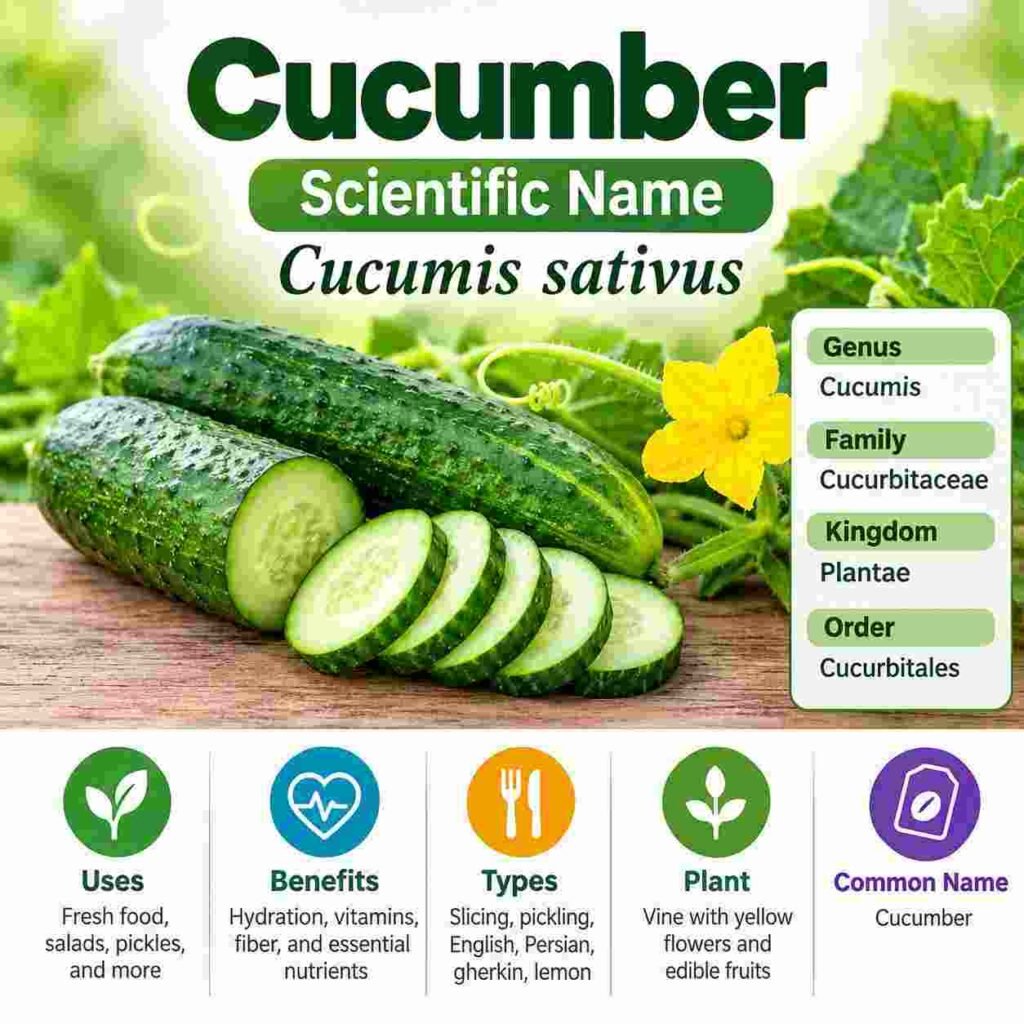
Cucumber is used in many ways for food and farm work. Most people eat it fresh in daily meals.
Fresh meals:
Cut cucumber works well in salads. It also works well in sandwiches and wraps. Some people add it to cooked vegetable dishes, too.
If you want something quick, you can eat cucumber by itself as a small snack.
Pickles:
Cucumbers are also used for pickling. This method helps keep the fruit longer. It also shifts the taste and the texture.
Pickled cucumbers are common in many American meals and are often served with sandwiches, burgers, and other foods.
Cucumber Water:
Cucumber slices are sometimes added to drinking water for flavor. This is a food and beverage use rather than a medical treatment.
Cooking:
Although many people eat cucumber raw, some cucumber varieties and traditional cuisines also use cooked cucumber in soups, stews, and other dishes.
Processing:
Cucumber can be turned into other items. Pickles are common, and fermented products are also made from it. Growers may raise certain types for fresh sales and also for food factories.
Cucumber Benefits
Cucumber may fit into a balanced eating plan. One clear trait is that it has a lot of water. It also brings small amounts of vitamins and minerals, plus other useful nutrients.
Hydration support:
Because cucumber is mostly water, it can add to your daily fluid intake. Still, it is not a substitute for drinking water. You still need water when your body requires it.
Vitamin K:
Cucumbers contain vitamin K. This vitamin helps blood clot. It also plays a role in bone function. Vitamin K levels can change. It depends on how much you eat and whether you eat the skin.
Vitamin C:
There is a small amount of vitamin C in cucumber. Vitamin C supports immune function. It also helps the body make collagen.
Fiber:
Cucumber has dietary fiber, mainly when you eat the skin. Fiber helps digestion work as it should. It can also help you stay consistent with a balanced way of eating.
Low in Calories:
Cucumber tends to be low in calories. A big reason is its water content. This is why it is often used in salads and lighter meals.
Provides Plant Compounds:
Cucumber contains naturally occurring plant compounds. Eating a variety of vegetables provides different nutrients and plant compounds as part of a balanced diet.
Cucumber Nutrition
The exact nutritional value of cucumbers depends on the variety, serving size, and whether or not the skin is eaten.
Cucumber Nutrition Table
The following table gives the approximate nutrition of raw cucumber with peel per 100 grams:
| Nutrient | Amount per 100 g |
|---|---|
| Calories | 15 kcal |
| Water | 95.2 g |
| Protein | 0.65 g |
| Total Fat | 0.11 g |
| Carbohydrates | 3.63 g |
| Dietary Fiber | 0.5 g |
| Sugars | 1.67 g |
| Calcium | 16 mg |
| Iron | 0.28 mg |
| Magnesium | 13 mg |
| Phosphorus | 24 mg |
| Potassium | 147 mg |
| Sodium | 2 mg |
| Vitamin C | 2.8 mg |
| Vitamin K | 16.4 mcg |
| Folate | 7 mcg |
Cucumber Scientific Name: Key Facts
Here are some important facts about the cucumber scientific name and plant:
- Scientific name: Cucumis sativus
- Common name: Cucumber
- Family: Cucurbitaceae
- Genus: Cucumis
- Species: sativus
- Plant type: Annual vine
- Main use: Food
- Botanical fruit type: Fruit
- Common culinary classification: Vegetable
- Growing season: Warm season
- Common food forms: Fresh and pickled
Also Read
- Brinjal Scientific Name, Family, Genus, and Classification (Eggplant)
- Pea Scientific Name, Genus, Uses, Benefits, and Types
- Tomato Scientific Name, Types, Uses, Benefits, and Plant
- Scientific Names of Vegetables: Cruciferous, Leafy, and Root List
FAQs:
What is the scientific name of cucumber?
The scientific name of cucumber is Cucumis sativus.
What is the genus of cucumber?
The genus of cucumber is Cucumis.
What family does cucumber belong to?
Cucumber belongs to the Cucurbitaceae family, also called the gourd family.
Is Cucumis sativus a fruit or vegetable?
Cucumis sativus produces a botanical fruit because the cucumber develops from the flower’s ovary and contains seeds. In cooking, cucumber is commonly treated as a vegetable.
What are the common types of cucumber?
Common cucumber types include slicing cucumbers, pickling cucumbers, English cucumbers, Persian cucumbers, gherkins, and lemon cucumbers.