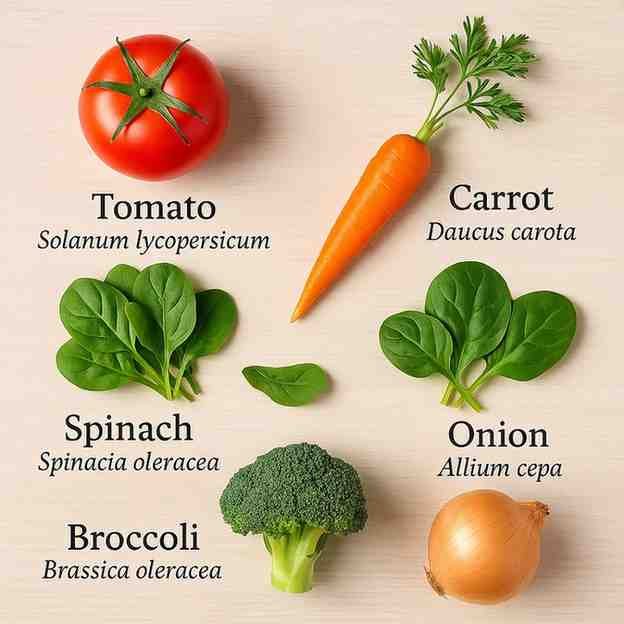
What is the scientific name for a carrot? The common carrot scientific name is Daucus carota.
The carrot is among the most commonly cultivated root vegetables globally. In addition to eating carrots raw as a vegetable, they are also added to various cooked dishes and made into beverages. Farmers cultivate carrots primarily due to their short growth time and high market demand. Students and readers often seek the scientific name for a carrot to understand its botanical identity, plant structure, and classification. This post outlines the scientific name of the carrot, its genus, plant features, leaves, habitat, age, height, weight, nutrition, uses, benefits, and types.
Table of Contents
Carrots are a member of an important group of plants that provide edible roots. The plant has been in cultivation for centuries as a source of food and medicine. Nowadays, carrots are planted both in home gardens and on commercial farms in many countries. The biological name of the carrot, its botanical background, and the plant’s features help kids, gardeners, and health enthusiasts understand this vegetable from a scientific perspective.
What is the Scientific Name for a Carrot?
The scientific name for a carrot is Daucus carota.
- Genus: Daucus
- Species: carota
- Subspecies (Cultivated): sativus
This is the name used worldwide in the areas of botany, agriculture, and plant science. Cultivated carrot is often written as Daucus carota subsp. sativus.
Carrot scientific name meaning, and pronunciation
Meaning:
- Daucus is a Latin word related to aromatic plants
- Carota refers to the carrot
The Latin name describes the plant’s botanical identity.
Pronunciation:
- DAW-kus kuh-ROH-tuh
Biological Classification of Carrot Plant
| Taxonomic Rank | Classification |
|---|---|
| Kingdom | Plantae |
| Division | Magnoliophyta |
| Class | Magnoliopsida |
| Order | Apiales |
| Family | Apiaceae |
| Genus | Daucus |
| Species | carota |
The classification clearly indicates that carrots are a member of the Apiaceae family, also known as the parsley family.
Genus of Carrot
The carrot genus is named Daucus. The plants of this genus are characterized by having very finely divided leaves and being capable of producing flowers that are small and arranged in umbellate clusters. These traits serve to differentiate carrot plants from other root crops.
The wild carrot, Daucus carota, is the species from which cultivated carrots are derived. Over many generations, people have selected the cultivated carrot for traits such as an enlarged edible root.
The genus is important when studying the relationship between carrots and other related plants.
Carrot Family
The carrot belongs to the Apiaceae family.
Apiaceae is also called the parsley family or Umbelliferae. Several familiar food and herb plants belong to this family, including:
- Carrot
- Parsley
- Celery
- Fennel
- Coriander
- Parsnip
- Dill
Many members of Apiaceae produce small flowers arranged in umbrella-like clusters. This flower structure is called an umbel.
Carrot Plant Description
A carrot is a biennial plant. Under natural conditions, it normally develops its main vegetative structures during the first year and can flower and produce seeds during the second year.
The part we usually eat is the taproot. Cultivated carrots have a swollen taproot that stores carbohydrates and other compounds.
The carrot plant has several main parts:
- Taproot
- Leaves
- Stem
- Flowers
- Seeds
During the first stage of growth, the plant produces a leafy top and develops its storage root. If the plant remains in the ground for a second growing season, it may produce a flowering stem.
Carrot Root
The carrot root is a modified taproot that becomes enlarged and serves as a storage organ.
The root develops below the soil surface. Its shape varies according to the cultivar and growing conditions. Some carrots are long and narrow, while others are short and wide.
The familiar orange color comes primarily from carotenoid pigments, particularly beta-carotene. Different colored carrots contain different combinations of pigments.
Carrot roots can be:
- Orange
- Purple
- Yellow
- Red
- White
The root is the main edible portion of the plant.
Carrot Leaves
Carrot leaves grow above the ground and have a finely divided appearance. They form a leafy crown above the root.
The leaves are generally green and have a feathery structure. Their divided form is one of the useful characteristics for identifying carrot plants. Carrot greens are also edible and can be used in some recipes. However, the root remains the part most commonly consumed.
Carrot plant height
How tall a carrot plant gets depends on where it is in its life cycle, the carrot type, and the conditions in the bed. When carrots are still building leaves, they usually stay close to the soil. You mostly see a rosette of green growth.
If the plant goes into the next year and starts to flower, it can grow a much taller stem. This is true for biennial types. A flowering carrot plant, once mature, is taller than the first-year leafy plant.

Carrot types and scientific names
You can grow many carrot varieties for home use or for sale. Most common garden carrots fall under Daucus carota subsp. sativus.
| Carrot Type | Common Characteristics |
|---|---|
| Nantes | Cylindrical root with a rounded tip |
| Imperator | Long, tapered root |
| Chantenay | Shorter and broader root |
| Danvers | Medium to long conical root |
| Paris Market | Short, round-shaped root |
| Purple Carrot | Purple-colored root |
| Yellow Carrot | Yellow-colored root |
| White Carrot | White or pale-colored root |
| Red Carrot | Red or reddish root |
| Mini Carrot | Small-sized carrot types |
Cultivars do not always match one simple label. So the everyday name you see in stores should not be treated as a different species.
Carrot nutrition
Carrots bring nutrients and plant compounds. They are often linked with beta-carotene. The body can turn that into vitamin A.
A typical carrot includes:
- carbohydrates
- dietary fiber
- vitamin A activity from carotenoids
- vitamin K
- vitamin C
- potassium
- other vitamins and minerals
Nutrition can vary based on the size of the carrot, the type, how it is prepared, and how much you eat.
Benefits of Eating Carrots
Carrots fit into a balanced diet. Their nutrient mix makes them handy for everyday meals.
- Help with normal sight
- Beta-carotene in carrots can be converted to vitamin A. Vitamin A supports normal vision.
- Add dietary fiber
- Carrots contain dietary fiber. Fiber supports normal digestion and can support a balanced eating pattern.
- Bring carotenoids
- Carrots have carotenoids and other plant compounds. The level and mix can differ by carrot variety.
- Adds Nutrients to the Diet
- Carrots provide several nutrients while also adding color and texture to meals.
- Fits Many Types of Meals
- Carrots can be eaten raw or cooked and can be included in salads, soups, stews, side dishes, and other recipes.
Uses of Carrots
Carrots have many food uses. We commonly use the root as a vegetable, but the plant also has culinary uses beyond the root.
Common uses include:
- Raw carrot sticks
- Salads
- Soups
- Stews
- Vegetable dishes
- Roasted carrots
- Carrot juice
- Smoothies
- Pickled carrots
- Carrot-based sauces
- Baked foods
Carrots are also used in processed food products and animal feed in some agricultural systems.
Key Facts Of Carrot
| Feature | Information |
|---|---|
| Common Name | Carrot |
| Scientific Name | Daucus carota |
| Cultivated Form | Daucus carota subsp. sativus |
| Genus | Daucus |
| Family | Apiaceae |
| Plant Type | Biennial |
| Edible Part | Taproot |
| Main Root Color | Orange, with other colors also cultivated |
| Plant Group | Flowering plant |
| Growing Location | Gardens and agricultural fields |
| Common Uses | Food, juice, salads, cooked dishes |
Also Read:
- Scientific Names of Vegetables: Cruciferous, Leafy, and Root List
- Tomato Scientific Name, Types, Uses, Benefits, and Plant
- Onion Scientific Name, Genus, Types, Uses, and its Benefits
- Chili Scientific Name, Genus, Types, Uses, and its Benefits
- Potato Scientific Name, Genus, Types, Uses, and Benefits
- Garlic Scientific Name, Genus, Uses, Benefits, and Types
FAQs
What is the scientific name for a carrot?
The scientific name for a carrot is Daucus carota. The cultivated carrot is commonly identified as Daucus carota subsp. sativus.
What is the genus of carrot?
The genus of carrot is Daucus.
What is the family of carrot?
The carrot belongs to the Apiaceae family, also known as the parsley family.
Is Daucus carota the scientific name of carrot?
Yes. Daucus carota is the species name used for the carrot. Cultivated carrots are commonly referred to as Daucus carota subsp. sativus.
Is carrot a root or a stem?
The familiar edible part of the carrot is a taproot. It becomes enlarged and stores nutrients for the plant.