
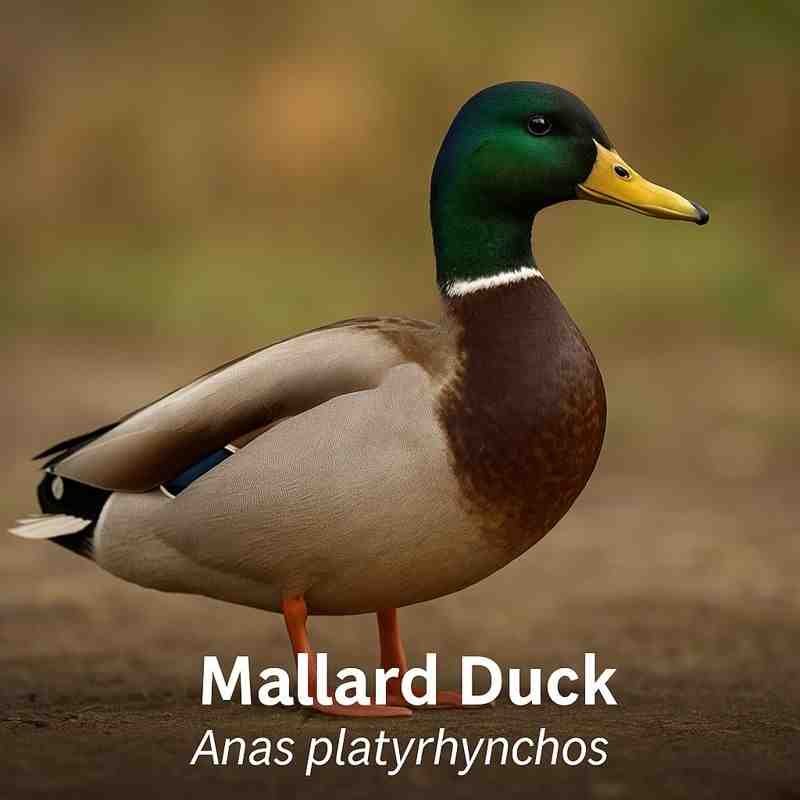
What is the scientific name for a duck? The common mallard duck scientific name is Anas platyrhynchos.
Ducks are among the most crucial waterfowl on the planet. They live in freshwater, saline, wetlands, and artificial ponds. The scientific name of a duck makes it easier for researchers to correctly identify duck species worldwide, thus avoiding the confusion caused by commonly used names.
Ducks possess many traits and abilities, including the ability to fly long distances, adapt to various weather conditions, and maintain a balance in their environment. Knowing the scientific name of a duck opens the door for one to trace its evolution, understand its physico-chemical makeup, and learn about its zoological classification.
Table of Contents
What is the Scientific Name for a Duck?
The scientific name for a duck is Anas platyrhynchos, referring to the common wild duck, also known as the mallard duck. Ducks are water birds and belong to the family Anatidae, which also includes swans and geese. The name duck owes its origin to Latin words that refer to the bird’s wide, flat bill and swimming manner.
Duck Scientific Name Meaning and Pronunciation
| Term | Details |
|---|---|
| Scientific Name | Anas platyrhynchos |
| Pronunciation | Ay-nas plat-ee-rine-kos |
| Latin Meaning | Anas means “duck,” and platyrhynchos means “broad bill,” referring to the wide, flat beak of ducks. |
The scientific name duck is made in italics every time, and the genus name Anas is always capitalized, while the species name platyrhynchos is not written capital letters. This system of naming was established by the great scientist Carl Linnaeus under the binomial nomenclature method.
Duck Genus and Species:
- The duck’s genus is Anas
- The wild duck or mallard’s species name is Platyrhynchos
- All domesticated ducks are the offspring of wild mallard ducks
The genus Anas includes many species of ducks worldwide, such as mallards, teals, pintails, and wigeons. They are similar in body structure but different in color patterns, migration behavior, and size.
Biological Classification of Duck
This table presents the proper biological and zoological rank of ducks. Each classification level assists in tracing the evolutionary relationship among ducks and other birds.
| Classification Level | Scientific Term | Meaning |
|---|---|---|
| Kingdom | Animalia | Animals |
| Phylum | Chordata | Animals with a spinal cord |
| Class | Aves | Birds |
| Order | Anseriformes | Waterfowl birds |
| Family | Anatidae | Duck, geese, and swans family |
| Genus | Anas | Common duck group |
| Species | platyrhynchos | Mallard duck, most widespread duck |
| Common Name | Duck | Broad-billed water bird |
The provided table demonstrates the mapping of ducks correctly across both biological and zoological ranks. The layers of this classification give a picture of the ducks’ evolutionary connection to other birds and vice versa.
Duck Physical Characteristics
Ducks are bigger than other aquatic birds; for this reason, or better still, they inhabit the water, dive, and fly with their flexible bodies. The duck scientific name, Anas platyrhynchos, stands for its large bill and shapely body. The majority of ducks have waterproof feathers, which help the duck when it swims in the water.
Duck Size, Height, and Weight:
| Characteristic | Average Measurement |
|---|---|
| Duck Height | 40 cm to 60 cm |
| Duck Body Length | 50 cm to 70 cm (depending on species) |
| Duck Wingspan | 80 cm to 100 cm |
| Duck Weight | 0.7 kg to 1.6 kg |
| Mallard Duck Weight | 1.0 kg (average) |
| Duck Egg Weight | 50 to 65 grams |
The measurements presented here vary somewhat for different species, but the commonly known species, scientifically named Anas platyrhynchos, represents a domestic duck with standard body size.
Duck Colour and Feather Structure:
Although the majority of the ducks’ bodies are brown, grey, or black, the males have glossy green or blue feathers. Their feathers are kept waterproof because they are coated with the natural oil secreted from a gland located near the tail.
- The head feathers of male ducks (drakes) are often green.
- The color of female ducks is usually brown for stealth.
- Air is trapped by the feathers, making it easy for ducks to float on water.
Duck Heartbeat, Body Temperature, and Lifespan:
Ducks experience a rapid heartbeat, and their metabolic rate is high. The scientific name of the duck species is one factor that helps researchers link duck heart rate to endurance during flight and migration.
| Biological Feature | Details |
|---|---|
| Duck Heart Scientific Name | Same as duck (Anas platyrhynchos) |
| Duck Heartbeat (Resting) | 190 to 300 beats per minute |
| Body Temperature | 40°C to 42°C |
| Duck Lifespan in Wild | 5 to 10 years |
| Duck Age in Captivity | Up to 15 years |
The mallard duck, scientifically known as Anas platyrhynchos, is also a source of longevity in captivity due to the better diet and protection from predators it offers.
Duck Habitat and Distribution
Ducks inhabit every continent worldwide, except, of course, Antarctica. These birds prefer habitats with plenty of water.
Common Duck Habitats:
- Freshwater lakes
- Rivers and ponds
- Marshes and wetlands
- Coastal estuaries
- Agricultural fields during migration
- Urban water bodies and farm ponds
Among the species classified under the scientific name of duck are those that migrate seasonally. Mallard ducks, for example, cover thousands of kilometers to seek out the warmest areas during wintertime.
Duck Habitat Adaptations:
- Webbed feet facilitate swimming
- Waterproof feathers keep ducks warm in cold water
- Broad bill is an advantage in easy filtering of food from the water
- Migratory instinct is a means of survival in various climates
The classification of ducks scientifically indicates that these birds are among the most widespread waterfowl, thanks to their evolutionary adaptations.
Duck Diet and Feeding Behavior
The scientific name of the duck species is an omnivorous diet. Ducks feed both on water and land.
Duck Diet List:
| Diet Type | Examples |
|---|---|
| Aquatic Plants | Algae, pondweed |
| Insects | Water beetles, mosquitoes, snails |
| Grains | Rice, corn, barley |
| Small Fish and Tadpoles | For protein growth |
| Commercial Feed | Farm-grown ducks eat feed pellets |
Ducks use their broad bills to filter food from water. The mallard duck, scientific name, is known for dabbling—feeding from the water surface rather than diving deep.
Feeding Techniques
- Dabbling: Feeding near the water surface
- Grazing: Eating grass on land
- Filtering: Sifting through mud and water
- Diving (in some species): Searching for fish underwater
Types of Duck and Their Scientific Names
There are over 120 species of ducks found worldwide. The scientific name for a duck classification varies based on region and physical characteristics.
Common Types of Duck’s:
| Duck Name | Common Name | Scientific Name |
|---|---|---|
| Mallard Duck | Wild Duck | Anas platyrhynchos |
| Muscovy Duck | Farm Duck | Cairina moschata |
| Wood Duck | North American Duck | Aix sponsa |
| Northern Pintail | Migratory Duck | Anas acuta |
| Mandarin Duck | Asian Duck | Aix galericulata |
| Domestic Duck | Farm Duck | Descends from Anas platyrhynchos |
The mallard duck, whose scientific name is Anas platyrhynchos, is most important because it is the ancestor of most domestic duck breeds.
Duck Reproduction and Life Cycle
The duck scientific name, Anas platyrhynchos, follows a seasonal breeding pattern. Ducks reproduce through egg-laying, and all duck species are oviparous, meaning they lay eggs rather than giving birth to live young.
Reproduction Process:
- Courtship Display: Male ducks show mating displays using their feathers and sounds.
- Mating Season: Typically occurs in early spring.
- Nesting: Ducks build nests near water using grass, reeds, and down feathers.
- Egg Laying: Female ducks lay 5 to 12 eggs.
- Incubation: Lasts 25 to 30 days.
- Ducklings Hatch: Baby ducks are precocial, meaning they can walk and swim immediately after hatching.
Duck Reproduction Facts:
| Reproductive Feature | Detail |
|---|---|
| Egg Incubation | 28 days (average) |
| Number of Eggs | 5 to 12 per clutch |
| Duckling Survival Rate | Higher in protected habitats |
| Mallard Duck Reproduction | females protect ducklings for six weeks |
Conclusion
All of these are sometimes considered ducks. They form a diverse family, Anatidae. Their success has spread throughout the world, and the different skills they have acquired, such as the mallard presenting itself with a filter-feeding beak and the eider diving deep. Understanding the differences between them, namely the ducks, which feed on the surface, and the divers, which swim underwater, helps us understand how these two groups of species can coexist in a common ecosystem without necessarily competing for food.


Great article! I found the section on the biological classification of ducks particularly interesting, especially the details about the family Anatidae. It made me curious about the use of certain supplements in veterinary care for waterfowl. I was reading about iodine-based treatments and their applications, but I’m unsure about the specifics. Does anyone have experience with products like the one described at if it’s ever used for avian species or in conservation efforts? I’m trying to understand the crossover between human and animal medicinal applications.