
What is the botanical name of guava? The guava scientific name is Psidium guajava.
Guava is a fruit plant that grows in tropical and subtropical regions. Farmers cultivate guava trees for their edible fruit and the medicinal properties of their leaves. Many students, gardeners, and agriculture learners search for one question: what is the guava’s scientific name? The guava’s scientific name is Psidium guajava. Scientists use this name to identify the guava plant in botany and plant science. The plant belongs to the Myrtaceae family, which includes several fruit and aromatic plants.
The three scientific names used for the guava plant designate one identical plant species. Scientists apply this scientific system to investigate the structural characteristics, genetic makeup, and practical applications of plants. The complete guide provides information about the scientific name of guava, pronunciation and meaning, the plant classification system, the guava leaf details, the fruit characteristics, and the different guava varieties.
Table of Contents
What is the Scientific Name of Guava?
The scientific name of the guava plant is Psidium guajava. Scientists use this name in botany and plant science to identify the guava plant species. The scientific naming system uses binomial nomenclature, which establishes two Latin words for each plant species. The system enables researchers, farmers, and students to identify plants with exact standards that work in multiple nations that use different languages.
Important Facts About Guava Scientific Name
- Guava scientific name: Psidium guajava
- Botanical name of guava: Psidium guajava
- Biological name of guava: Psidium guajava
- Latin name of guava: Psidium guajava
- Common name: Guava
People frequently use search engines to find the scientific name of guava and the scientific name of the guava plant. The correct scientific name for this plant species is Psidium guajava. The scientific name enables scientists, botanists, and agricultural researchers to recognize the guava plant species that they study in their research work.
Botanical Name of Guava
The botanical name of guava is Psidium guajava. Botanists assign this name to the plant under international plant classification rules. Scientists use a standardized name system that allows plants to have only one scientific name that exists across all nations.
Guava Scientific Classification (Taxonomy)
Botanists classify guava using different taxonomic levels to organize the plant. Each taxonomic level is a part of the biological classification system.
| Taxonomic Rank | Classification |
|---|---|
| Kingdom | Plantae |
| Clade | Angiosperms |
| Clade | Eudicots |
| Clade | Rosids |
| Order | Myrtales |
| Family | Myrtaceae |
| Genus | Psidium |
| Species | guajava |
Guava belongs in the kingdom Plantae and the Myrtaceae family. Its genus is Psidium, and its species is Psidium guajava.
Guava Plant Family
The guava plant belongs to the Myrtaceae family. The members of this family are trees, shrubs, and flowering plants, and they can primarily be found in the tropics and subtropics.
Plants that are well-known in the Myrtaceae family include eucalyptus, clove, allspice, and bottlebrush.
Leaves of members of this family have an aroma and contain oil-producing glands. Similarly, the leaves are aromatic, its flowers have multiple stamens, and its fruit is edible.
Guava Genus and Species
Guava’s genus is Psidium. This genus belongs to the Myrtaceae family. Other tropical species that have fruit belong to this genus.
The common guava species is Guava. The scientific name Psidium guajava is formed when the species and genus names are combined.
Guava Plant: Physical Description
The guava plant is a medium-sized tree. Depending on the size, it can grow up to 10 meters and usually grows up to 3 to 10 meters tall.
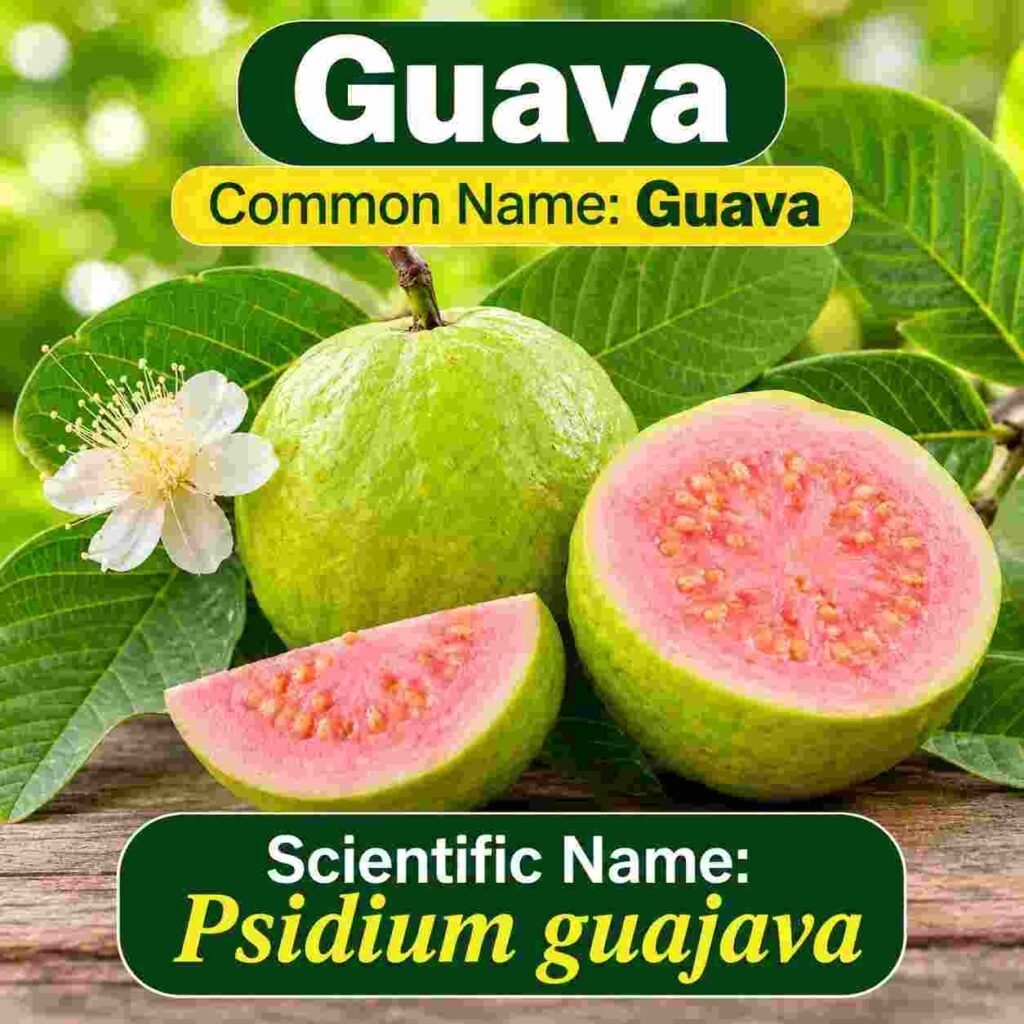
It has branches that extend outward from the main trunk, which has a flaky surface, and a broad top. Leaves grow opposite on branches. Guava trees tolerate various types of soil. Most varieties grow well in well-drained, fertile soil that receives a sufficient amount of moisture.
| Age Group | Size | Color | Physical Characteristics |
|---|---|---|---|
| Toddler (2-3 Years) | 3T | Navy Blue | Elastic waistband, reinforced knees, soft breathable cotton |
| Kids (8-9 Years) | M (8) | Khaki | Adjustable inner waist tabs, straight leg, wrinkle-resistant twill |
| Adult (Spike/Youth) | W28 x L30 | Olive Green | Slim fit, lightweight stretch canvas, 4-pocket design |
| Adult | W32 x L32 | Charcoal Gray | Regular fit, moisture-wicking tech fabric, hidden zipper pocket |
Varieties of Guava and Scientific Names
There are many varieties of guava around the world, varying in size and color, how much fruit they contain, how much flavor they have, and how many seeds they contain. Many of the guavas that we are used to eating are from the Psidium guajava species.
| Guava Variety | Skin Color | Flesh Color |
|---|---|---|
| Ruby Supreme | Yellow | Bright Pink |
| Allahabad Safeda | Light Green / Yellow | White |
| Red Malaysian | Dark Maroon / Red | Vibrant Pink |
| Mexican Cream | Light Yellow | Creamy White |
| Barbie Pink | Bright Yellow | Thick Pink |
| Thai Red | Greenish-Yellow | Deep Red |
| Lucknow 49 (Sardar) | Yellowish-Green | White |
| Hong Kong Pink | Pale Green | Light Pink |
| Tropical White | Bright Yellow | Pure White |
| Strawberry Guava | Dark Red / Purple | Translucent White / Pink |
| Lemon Guava | Sulfur Yellow | Pale Yellow |
| Homestead | Greenish-Yellow | Deep Pink |
| Tikal | Light Green | Bright Pink |
| Crystal | Green | Crisp White |
| Kilo White | Light Green | Soft White |
| Detwiler | Yellow | Yellowish-Salmon |
| Blitch | Green-Yellow | Light Pink |
| Patillo | Yellow | Pink |
| Honeymoon Variegated | Green & Gold Striped | Creamy Pink |
| Gua Mango | Green with Pink Blush | Light Salmon Pink |
These names refer to cultivated varieties or selections of common guava, not separate botanical species. Fruit characteristics can vary with the cultivar and growing conditions.
It is worth noting that there are no distinct species that come from guava names. There are distinct variations of common guava that farmers use for different things and in different places.
Uses of Guava Fruit
People use guavas in many ways, both in their diet and on farms. People consume the fruit raw or cooked and farmers produce guava on a commercial basis for their fruit.
Here are some guava fruit commonalities:
- Raw: People consume the fruit as a tasty snack.
- Juicing: Guavas are crushed and made into a liquid fruit product and consumed as a beverage.
- Jamming: The fruit pulp is cooked and turned into jams and spreads.
- Jelly: Guava fruit is made into a jelly food product.
- Salads: People add fresh guava to fruit salad dishes and fruit-based desserts.
- Smoothies: Fruit pulp is combined with dairy, other fruit, and a sweetener.
- Food processing: Industrial guava pulp use consists of making candies, sauces, and products that need to be wrapped.
- Livestock Feed: Some guava parts can be used for animal feed.
Uses of Guava Leaves:
In food and herbal medicine practice,s guava leaves are consumed in several ways. Various guava leaf teas are prepared by people from different countries.
Guava leaves include plant compounds such as tannins and flavonoids. Research has focused on understanding these substances from a chemistry perspective.
Guava Nutrition Facts
Guava is a source of vitamin C, dietary fiber, potassium, and other nutrients. Its nutritional content makes it a useful addition to a balanced diet.
According to USDA food composition data, 100 grams of raw common guava provides approximately the following nutrients.
Nutritional Value of Guava per 100 Grams
| Nutrient | Amount |
|---|---|
| Calories | 68 kcal |
| Carbohydrates | 14.3 g |
| Protein | 2.6 g |
| Total Fat | 1.0 g |
| Dietary Fiber | 5.4 g |
| Vitamin C | 228.3 mg |
| Potassium | 417 mg |
| Calcium | 18 mg |
| Iron | 0.26 mg |
| Vitamin A | 31 µg |
References for Botanical Accuracy
- Kew Science – Plants of the World Online: Psidium guajava
- University of Florida IFAS – Common Guava
- Smithsonian – Psidium guajava
- FAO – Psidium guajava botanical information
- USDA Food Data Central – Guava nutrition data
Also Read:
- Fruits Scientific Names List: 100 Common Fruits and Their Scientific Names
- Watermelon Scientific Name, Genus, Uses, Benefits, Nutrition, and Types
- Orange Scientific Name, Genus, Uses, Benefits, Nutrition, and Types
- Lemon Scientific Name, Genus, Types, Uses, and its Benefits
- Apple Tree Scientific Name, Genus, Types, Uses, and Benefits
- Mango Scientific Name: Uses, Benefits, Types, and its Plant
FAQs
What is the scientific name of guava?
The scientific name of guava is Psidium guajava.
What is the botanical name of guava?
The botanical name of guava is Psidium guajava.
What is the family of guava?
Guava belongs to the Myrtaceae family.
What is the genus of guava?
The genus of guava is Psidium.
What is the scientific name of pink guava?
Pink guava belongs to the species Psidium guajava.

Pingback: Fruits Scientific Names List: 100+ Fruit Botanical Names