
What is the scientific name of jasmine? The jasmine scientific name is Jasminum (Genus).
Jasmine is one flower most cherished around the world-the flower’s sweet scent, lovely blossoms, and rich cultural symbolism all add to its esteem. In scientific terms, orchids belong to the family of Oleaceae and comprise more than 200 species. Jasmine has been celebrated for centuries in perfumes and teas, in traditional medicine and spiritual rituals. Learning about jasmine scientific name, meaning, pronunciation, classification, and types of jasmine deepens one’s appreciation for the timeless plant and the many things made from it.
Table of Contents
What is the Scientific Name of Jasmine?
Jasminum is the scientific name of jasmine, a botanical genus from the family Oleaceae. The word jasminum originates from the Persian yasamin, meaning “gift of God.” It is treasured around the world for its sweet fragrance, ornamental beauty, and medicinal properties.
Jasmine Scientific Name, Meaning, and Pronunciation
- Jasmine scientific name Meaning: Jasminum is the name given to a family of flowering plants, which are known for their highly fragrant flowers.
- Jasmine scientific name pronunciation: Pronounced “JAZ-min-um”.
- Binomial Nomenclature: The common jasmine’s binomial numbering in scientific nomenclature is Jasminum officinale.
By knowing the meaning and pronunciation of the botanical name, botanists and plant enthusiasts can accurately identify jasmine in various languages and regions worldwide.
Jasmine Genus (Jasminum)
The genus Jasminum undoubtedly holds a treasure trove of species, totaling over 200, all of which are flowering shrubs and vines. Inhabitants of Asia, Europe, Africa, and even Oceania, these plants need a bit of warmth to flourish.
Common factors of the genus:
- White or yellow star-shaped flowers
- Strong, sweet smell
- Opposite or alternate leaves
- Possible to be either evergreen or deciduous
- The perfumery, teas, and rituals used worldwide
Biological Classification of Jasmine Flower
| Taxonomic Rank | Classification |
|---|---|
| Kingdom | Plantae |
| Clade | Angiosperms |
| Clade | Eudicots |
| Clade | Asterids |
| Order | Lamiales |
| Family | Oleaceae (Olive family) |
| Genus | Jasminum |
| Species | ~200 species (e.g., Jasminum sambac, Jasminum officinale) |
This classification proves that jasmine is part of the olive family, known for its fragrant flowers and evergreen shrubs.
Jasmine Physical Characteristics (Age, Size, Weight, Colors)
Jasmine Plant Size
- Shrub varieties: 3–10 feet tall
- Climbing varieties: Up to 15–30 feet
- Potted indoor jasmine: 2–5 feet
Flower Size
- Diameter: 1–3 cm
- Some large-flowered species reach 4 cm
Flower Colors
Most jasmine species bloom in:
- White (most common)
- Cream
- Yellow
Rare light pink or purple hues (in hybrid species)
Plant Weight
- Small potted plant: 0.5–2 kg
- Mature outdoor shrubs: 5–20+ kg depending on species
Jasmine Lifespan (Age)
With proper care, jasmine can live:
- Indoor plants: 5–10 years
- Outdoor shrubs: 15–25 years
- Wild species: Up to 30+ years
Types of Jasmine
A brief list of the most popular and significant types of jasmine from around the globe:
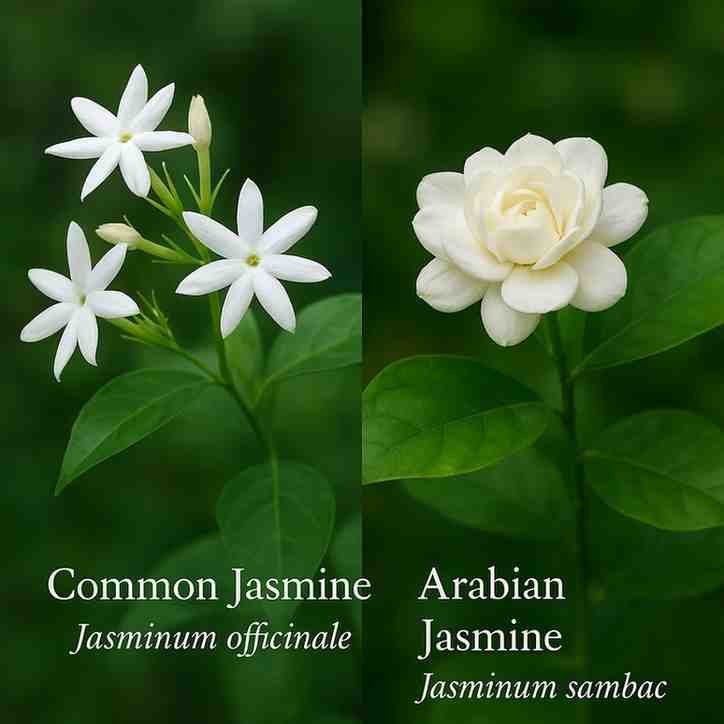
1. Common Jasmine (Jasminum officinale):
- Typical white, star-shaped flowers
- Strong sweet smell
- Nature of a climbing vine
- Mostly used in teas and essential oils
2. Arabian Jasmine (Jasminum sambac):
- The national flower of both the Philippines and Indonesia
- Tiny white blooms resembling roses
- Making garlands, religious ceremonies, and the common use of jasmine tea
- A shrub that doesn’t lose its leaves and has shiny leaves
3. Spanish Jasmine (Jasminum grandiflorum):
- Big, all white flowers
- The perfume industry is one of the main users of this species
- The vigorous climbing vines support the plant’s growth
4. Winter Jasmine (Jasminum nudiflorum):
- Flowers are yellow, and they bloom in winter
- Leaves come after the flowers bloom
- The shrub is tough enough to cope with cold climates
5. Italian Jasmine (Jasminum humile):
- Dazzling yellow bunches of flowers
- Weak fragrance
- Quick-growing decorative shrub or small vine
6. Starlight Jasmine (Jasminum nitidum):
- White flowers with lilac-tinged buds
- Sweet-smelling and glossy evergreen leaves
- Shrub-like and compact, thus fitting in the decorative borders
7. Primrose Jasmine (Jasminum mesnyi):
- Pale yellow flowers in a double arrangement
- Just a hint of fragrance
- Easy to grow in warm climates and spreads quickly
| Common Name | Scientific Name |
|---|---|
| Common Jasmine | Jasminum officinale |
| Arabian Jasmine | Jasminum sambac |
| Spanish Jasmine | Jasminum grandiflorum |
| Winter Jasmine | Jasminum nudiflorum |
| Italian Jasmine | Jasminum humile |
| Primrose Jasmine | Jasminum mesnyi |
| Starlight Jasmine | Jasminum nitidum |
| Royal Jasmine | Jasminum rex |
| Lemon-Scented Jasmine | Jasminum azoricum |
| Forest Jasmine | Jasminum abyssinicum |
| Downy Jasmine | Jasminum multiflorum |
| Pink Jasmine | Jasminum polyanthum |
| Cape Jasmine | Jasminum capense |
| Wild Jasmine | Jasminum angustifolium |
| Indian Jasmine | Jasminum auriculatum |
| Chinese Jasmine | Jasminum sinense |
| Arabian Night Jasmine | Jasminum sambac ‘Arabian Nights’ |
| Dwarf Jasmine | Jasminum parkeri |
| Water Jasmine | Jasminum sambac ‘Maid of Orleans’ |
| Coal Jasmine | Jasminum dichotomum |
Jasmine Habitat and Growing Conditions
Jasmine plants are renowned for their adaptability and ability to thrive in a wide range of climates. Their natural strength and fragrant flowers are among the reasons why they are loved in gardens worldwide. Knowing jasmine’s natural habitat and its preferred ideal conditions will allow you to grow strong and healthy plants.
Natural Habitat of Jasmine
1. Tropical and Subtropical Regions
Most of the jasmine species are found in South Asia, Southeast Asia, and some parts of Africa, where the climate is warm and humid. Such conditions not only let jasmine grow vigorously but also keep it blooming splendidly all year round.
2. Warm Temperate Forests
Some jasmine varieties enjoy the warmth of summers and the coolness of mild winters, such as those found in the Mediterranean, southern Europe, and China. They can change with the seasons, but do not suffer from severe frosts.
3. Open Woodlands
Jasmine is mainly found on forest edges and in open woodlands, where it requires filtered sunlight. Besides giving the plant a chance to climb and spread, these areas also provide nutrient-rich soil and moisture.
4. Hillsides and Dry Rocky Areas
Some hardy jasmine plants are able to survive in rocky soil and sloped areas. Their roots are strong and anchor well into loose or dry ground, so they are ideal for planting on uneven terrain.
5. Gardens and Home Landscapes
The aroma and appearance of jasmine plants have made them very popular, and so they are planted in large numbers in home gardens, balconies, fences, pergolas, and patios. Depending on the species, they can be grown both as climbing vines and compact shrubs.
Ideal Growing Conditions for Jasmine
To ensure that jasmine not only blooms a lot but also remains healthy, offer the following conditions:
1. Full Sun to Partial Shade
The coolest 4 to 6 hours of direct sunlight every day act as a booster for flowering, at the very least. A few types resist partial shade but will bear fewer flowers.
2. Well-Drained Soil
Waterlogged soil is not the enemy of jasmine. The perfect soil is:
- Loamy
- Well-draining
- Slightly acidic to neutral (pH 6.0–7.5)
Adding compost improves soil structure and enhances flower growth.
3. Moderate Watering
Jasmine does not mind being watered, but watering the roots is a deadly mistake. Water the plant as follows:
- Constantly in spring and summer
- Rarely in winter
- Lightly but steadily for the potted jasmine
4. Warm Environments
Most types of jasmine are cool-tolerant, with temperatures between 15–30°C (59–86°F). Cold weather can kill the plant. Therefore, in areas with severe cold, jasmine is most often kept in pots or greenhouses.
Uses of Jasmine
Jasmine is not only a stunning flower but also a vital contributor in the areas of global culture, health, beauty, and cuisine.
1. Culinary Uses
Jasmine imparts a subtle aroma and taste to a wide range of dishes and beverages.
- Jasmine Tea: It is one of the most fragrant teas worldwide, especially in China, where dried green tea leaves absorb the aroma of fresh jasmine flowers.
- Desserts & Sweets: Jasmine is the main flavor for custards, puddings, syrups, honey blends, and sweet rice dishes.
- Natural Flavoring: A few chefs add jasmine extracts to cocktails, baked goods, and fruit salads.
- Garnishing: Fresh jasmine flowers are the main heroes as garnishes in East Asian cooking.
The aromatic quality of jasmine is subtle but powerful, thus making it a sought-after ingredient for gourmet foods.
2. Medicinal Uses of Jasmine
Jasmine has been highly sought after throughout history in Ayurveda, Chinese medicine, and aromatherapy due to its healing properties.
Health Benefits List:
- Stress & Anxiety Relief: Jasmine oil calms the nervous system.
- Anti-inflammatory: Its extracts lessen irritation and soothe the skin.
- Mood Lifting: Inhaling the scent of jasmine can improve mood and relieve symptoms of depression.
- Digestive Aid: Jasmine tea helps reduce bloating and promote intestinal health.
- Skin Repair: Jasmine oil is good for topical application on dry skin, scars, and minor wounds.
- Respiratory Relief: Helps with cough, cold, and shortness of breath.
Its mild yet powerful healing powers make jasmine a well-known natural remedy.
3. Cultural & Religious Uses
Jasmine is a universal flower with deep cultural value across the continents of Asia, the Middle East, and the Mediterranean.
Cultural Importance:
- Weddings: Used in bridal hair, necklaces, and garlands in India, Pakistan, Thailand, and Sri Lanka.
- Festivals: During religious and festive occasions, jasmine flowers are given as an offering.
- Symbolism: It has the qualities of love, purity, innocence, beauty, and spiritual awakening.
In the majority of cultures, jasmine is considered the flower that brings good luck, positivity, and protection.
4. Cosmetic & Perfume Uses
Jasmine has cemented its place as one of the most extravagant materials for the fragrance and beauty industry.
Reasons for High Valuation:
- Jasmine Absolute Oil: Very rare, costly, and made from the petals picked on the same day.
- Signature Scent: The perfumes of Chanel, Dior, Gucci, and Tom Ford have it as their main note.
- Beauty Products: Present in lotions, soaps, creams, shampoos, and aromatic oil mixtures.
- Aromatherapy: Functions as a stress buster and sleep enhancer.
The marvelous smell of jasmine makes it an everlasting choice in high-end products.
Benefits of Jasmine
Jasmine’s gifts comprise a powerful mix of health, environmental, and emotional benefits:
- Stress Reduction:
- The smell of jasmine calms the mind and anxiety almost instantly.
- Improves Sleep:
- The scent of jasmine, by relaxing the senses, induces deeper and higher quality sleep.
- Skin Hydration & Healing:
- Jasmine oil gives skin its hydration, relieves dryness, and helps scars and stretch marks disappear.
- Natural Antidepressant:
- It has been found that jasmine scents can increase serotonin levels and hence mood through aromatherapy.
- Enhances Romantic Mood:
- With its divine scent, jasmine is synonymous with love and romance.
- Beautifies Gardens & Homes:
- The presence of flowering jasmine plants in a garden ensures that the whole area smells good, thus attracting people and insects.
- Attracts Bees & Butterflies:
- Jasmine plays an important role in maintaining a healthy ecosystem by attracting pollinators.
Common Names of Jasmine in Different Countries
| Country | Local Name for Jasmine |
|---|---|
| United States / UK | Jasmine |
| India | Chameli / Malli / Mogra |
| Pakistan | Chameli / Motia |
| Bangladesh | Beli |
| Sri Lanka | Pichcha Mala |
| Nepal | Chameli |
| China | 茉莉花 (Mòlìhuā) |
| Japan | ジャスミン (Jasumin) |
| South Korea | 자스민 (Jaseumin) |
| Thailand | มะลิ (Mali) |
| Vietnam | Hoa Nhài |
| Philippines | Sampaguita |
| Indonesia | Melati |
| Malaysia | Melur / Melati |
| Saudi Arabia | ياسمين (Yasmeen) |
| UAE | ياسمين (Yasmeen) |
| Turkey | Yasemin |
| Iran | یاسمن (Yāsaman) |
| Egypt | ياسمين (Yasmeen) |
| France | Jasmin |
| Spain | Jazmín |
| Italy | Gelsomino |
| Germany | Jasmin |
| Russia | Жасмин (Zhasmin) |
| Portugal | Jasmim |
| Brazil | Jasmim |
| Argentina | Jazmín |
| South Africa | Jasmine / Jasmyn |
| Kenya | Jasmini / Jasmine |
| Nigeria | Jasmin / Jasmine |
Conclusion
Jasmine (Jasminum officinale) is more than just a beautiful flower. It is a plant that represents culture, fragrance, medicinal properties, and global importance. Jasmine’s scientific name, genus, species, colors, types, age, and benefits list make it the most favorite flowering plant across the globe.
Also Read:
- Scientific Names of Common Plants: Flowers, Herbs, and Trees
- Ginger Scientific Name, Genus, Uses, Benefits, and Types
- Mint Scientific Name, Types, Uses, Benefits, and Leaves
- Rice Scientific Name, Genus, Habitat, FACTS, Uses, and Types
FAQ About Jasmine
What is the scientific name of jasmine?
The scientific name of jasmine is Jasminum.
What is the binomial name of the common jasmine?
Jasminum officinale
How do you pronounce the jasmine scientific name?
Pronunciation: JAZ-min-um
What are the types of jasmine plants?
Arabian jasmine, common jasmine, winter jasmine, Spanish jasmine, Italian jasmine, and more.
What is the typical size of a jasmine plant?
Jasmine grows from 3 to 30 feet depending on the species.
What colors does jasmine come in?
Mostly white, yellow, and occasionally pink.
How long does a jasmine plant live?
Between 10 and 30 years depending on care and environment.
After looking at a handful of the articles on your blog, I truly appreciate your technique of blogging. I saved as a favorite it to my bookmark website list and will be checking back in the near future. Take a look at my web site too and tell me what you think.
Thanks a million!